Main Crop vs Light Crop: Nigeria's Two Cocoa Seasons and When to Buy
Nigeria harvests cocoa twice a year, and the season you buy in affects bean size, availability and price. A practical calendar for planning your purchases from Nigeria.
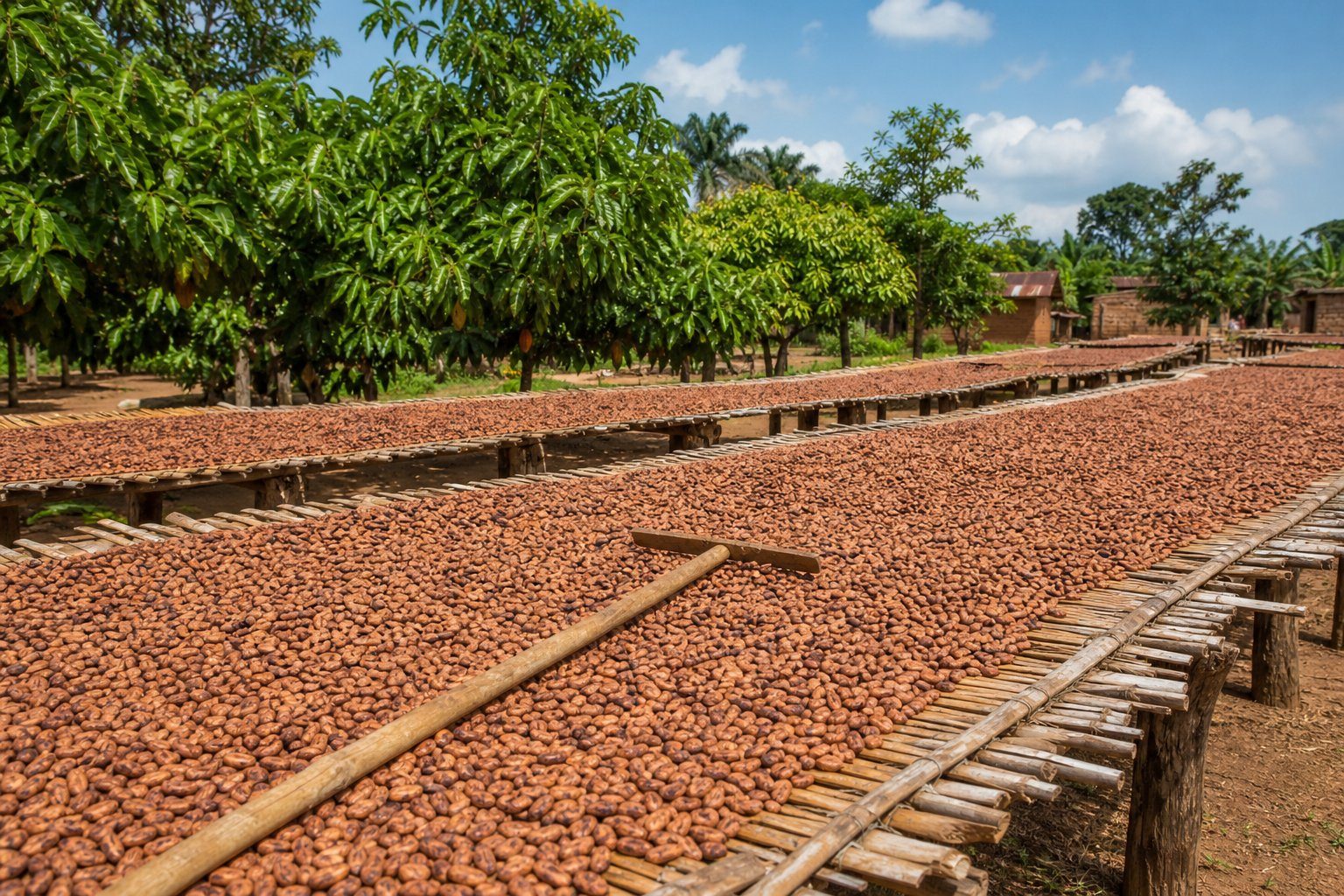
Cocoa trees in Nigeria flower and fruit throughout the year, but harvesting concentrates into two distinct peaks. Knowing them helps you plan shipment windows, anticipate bean quality and understand why offers change through the year.
The main crop (around October to February)
The main crop follows the long rainy season and is by far the larger of the two, accounting for the bulk of Nigeria's annual output. Pods mature over several months, so harvesting, fermentation and drying run continuously from roughly October through to February, with peak arrivals at exporters' warehouses between November and January. Main-crop beans are the largest and heaviest of the year, which is why contracts for main crop specify the lowest bean counts (often 100 beans per 100 g or fewer).
The light crop (around April to September)
The light — or mid — crop is harvested after the short dry season. Volumes are a fraction of the main crop, beans are smaller (higher count per 100 g) and the dry weather makes sun-drying easier and faster. Light-crop beans are an important source of supply for processors who need continuous intake and for traders covering positions between main crops.
Where Nigerian cocoa is grown
Production is concentrated in the south-west and south-south: Ondo is the largest producing state, followed by Cross River, Osun, Ekiti, Oyo, Ogun, Edo, Abia, Akwa Ibom, Delta and Kwara, with smaller volumes from states such as Kogi, Taraba and Adamawa. Timing varies slightly by region, with the south-south often running a little later than the south-west.
A buyer's calendar
| Period | What is happening | What it means for you |
|---|---|---|
| August – September | Light crop tailing off; exporters pre-finance main crop | Place main-crop forward contracts now for best allocation |
| October – December | Main-crop harvest, fermentation and drying at full pace | First main-crop shipments; strongest availability of Grade I, low counts |
| January – February | Main-crop arrivals peak then decline | Good time to ship volume programmes; quality still high |
| March – April | Transition; residual main crop in warehouses | Availability tightens; confirm stock before contracting |
| May – July | Light-crop harvest and drying | Smaller beans, competitive pricing, agree bean count explicitly |
Practical advice
- Agree bean count and grade per season — a main-crop specification will not be met by light-crop beans.
- Book early for main-crop Grade I: the best lots are allocated to buyers who contract ahead of the harvest.
- Expect fermentation and drying to take two to three weeks from pod-breaking before beans reach the exporter's warehouse, plus grading and documentation time before loading.
Whatever the season, Renamy Cocoa Nigeria will tell you plainly what is available, at which count and grade, and when it can ship. Ask for a quotation for the season you are planning.
Sourcing cocoa beans from Nigeria?
Get a written quotation and specification within two business days.
More Insights
Ready to Source Export-Grade Cocoa Beans from Nigeria?
Tell us your grade, tonnage, packing and destination port. Our export team will prepare a detailed FOB or CIF quotation and a sample plan.