EUDR and Nigerian Cocoa: What Importers Should Expect From Their Supplier
The EU Deforestation Regulation makes farm-level traceability a condition of selling cocoa into Europe. Here is what the rules ask for, and how to tell whether a Nigerian supplier can actually deliver it.
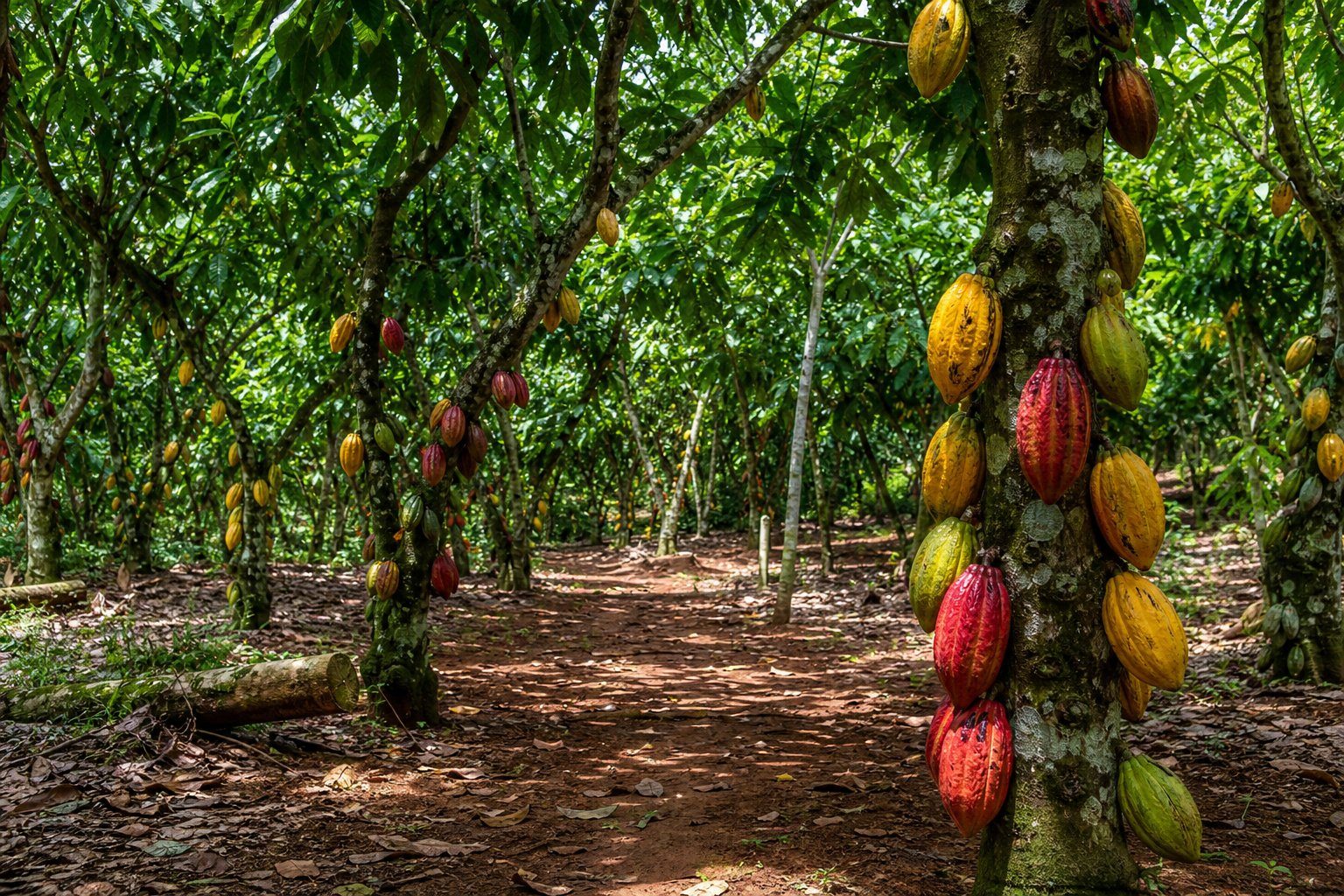
The EU Deforestation Regulation (EUDR, Regulation (EU) 2023/1115) prohibits placing cocoa and cocoa products on the EU market unless they are deforestation-free, were produced in accordance with the laws of the producing country, and are covered by a due-diligence statement. For importers, the practical consequence is that every tonne of Nigerian cocoa sold into Europe must be traceable to the plots of land where it was grown.
| Application dates. The EU has revised the EUDR timeline since adoption. Confirm the currently applicable dates for large and small operators with your compliance adviser before contracting. [Owner: update this note when the EU publishes final application dates.] |
What the regulation asks for
- Geolocation of all plots of land where the cocoa was produced — a point coordinate for plots under four hectares, and a polygon for larger plots.
- Evidence of no deforestation after 31 December 2020 on those plots, typically assessed against satellite imagery.
- Legality — production in line with Nigerian land-use, environmental, labour and tax laws.
- Segregation — compliant cocoa must not be mixed with cocoa of unknown origin.
- A due-diligence statement submitted by the EU operator through the EU information system before the goods are placed on the market.
What this means for a Nigerian exporter
The legal obligation sits with the EU operator, but it cannot be met without data from origin. An exporter serving EU buyers therefore needs: a register of the farmers supplying each lot; GPS points or polygons for their plots; a system that keeps those lots physically separate from general stock through fermentation, drying, warehousing and bagging; and the ability to export the data in a format the buyer's due-diligence platform accepts.
Questions to ask a supplier
- How many of your supplying farms are mapped, and in which local government areas?
- Do you supply points or polygons, and in what file format (CSV, GeoJSON, KML)?
- How do you segregate traceable lots from other cocoa in the warehouse?
- Can your inspector or mine verify the lot identity at stuffing?
- Have you had plots screened against deforestation alerts, and can you share the result?
Our approach
Renamy Cocoa Nigeria offers Traceable Single-Origin Lots: identity-preserved Grade I cocoa from named producing areas, shipped with a farmer register and plot geolocation data. We are transparent about the scope of what we can currently provide and will confirm it in writing before you contract, so that your compliance team knows exactly what they will receive. Talk to us about your due-diligence requirements.
Sourcing cocoa beans from Nigeria?
Get a written quotation and specification within two business days.
More Insights
Ready to Source Export-Grade Cocoa Beans from Nigeria?
Tell us your grade, tonnage, packing and destination port. Our export team will prepare a detailed FOB or CIF quotation and a sample plan.