Quality Assurance
Cocoa quality is decided in the fermentation box, on the drying table and at the cut-test bench — long before a container is sealed. Here is how we control it.
Specify. Cut-Test. Document. Repeat.
We do not rely on the grading certificate alone. Quality is built through a sequence of checks, each catching problems that would be expensive to find at your factory.
Every order starts with a written specification: grade, crop, bean count, moisture and any laboratory parameters you require. From there our warehouse team applies checkpoints at buying, on intake, during conditioning and at bagging. The Federal Produce Inspection Service grades each lot before export, and we actively support third-party inspection by the buyer's nominated agency.
- Written spec per contract
- Farmer-group selection
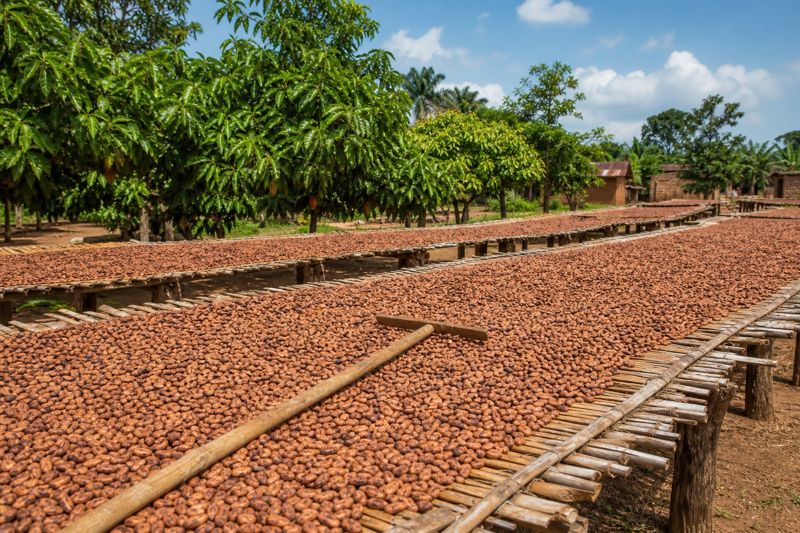
- Fermentation & drying supervision
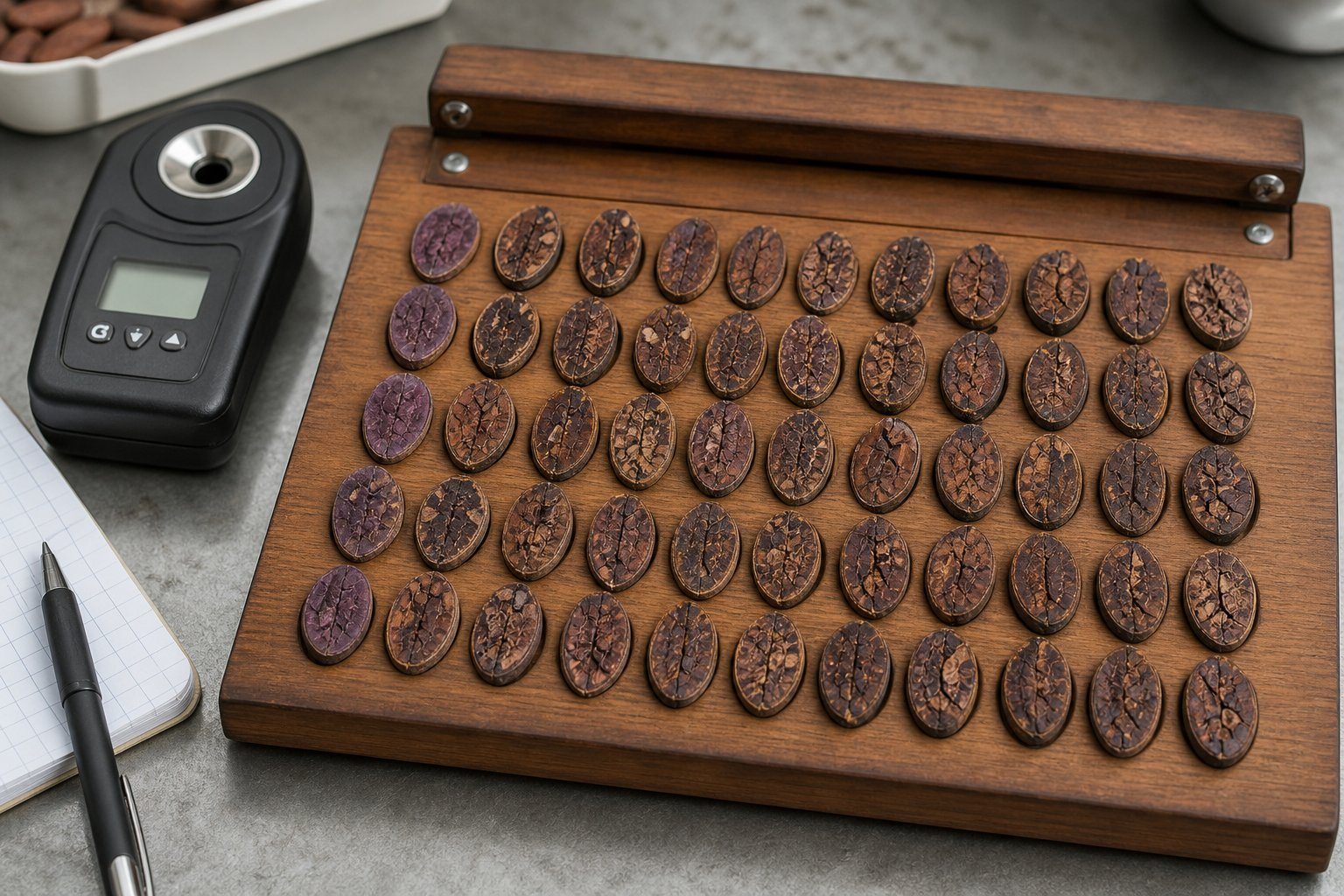
- Cut test at intake & bagging
- Moisture & bean count per lot
- FPIS grading certificate
- Third-party inspection support
- Loading photographs & report
Six Stages of Control
1. Farm & Fermentation
We buy from farmer groups that ferment in boxes or heaps for five to seven days with proper turning. Under-fermented (slaty, purple) beans are the most common fault in West African cocoa, and it starts here.
2. Drying
Slow sun-drying on raised mats or tables over one to two weeks brings beans to export moisture while allowing acidity to dissipate. Beans dried too fast, or on bare ground, are rejected.
3. Intake Cut Test
Every lot arriving at the warehouse is sampled and cut-tested for fermentation level, slaty, mouldy, insect-damaged, germinated and flat beans, with moisture and bean count recorded.
4. Conditioning & Storage
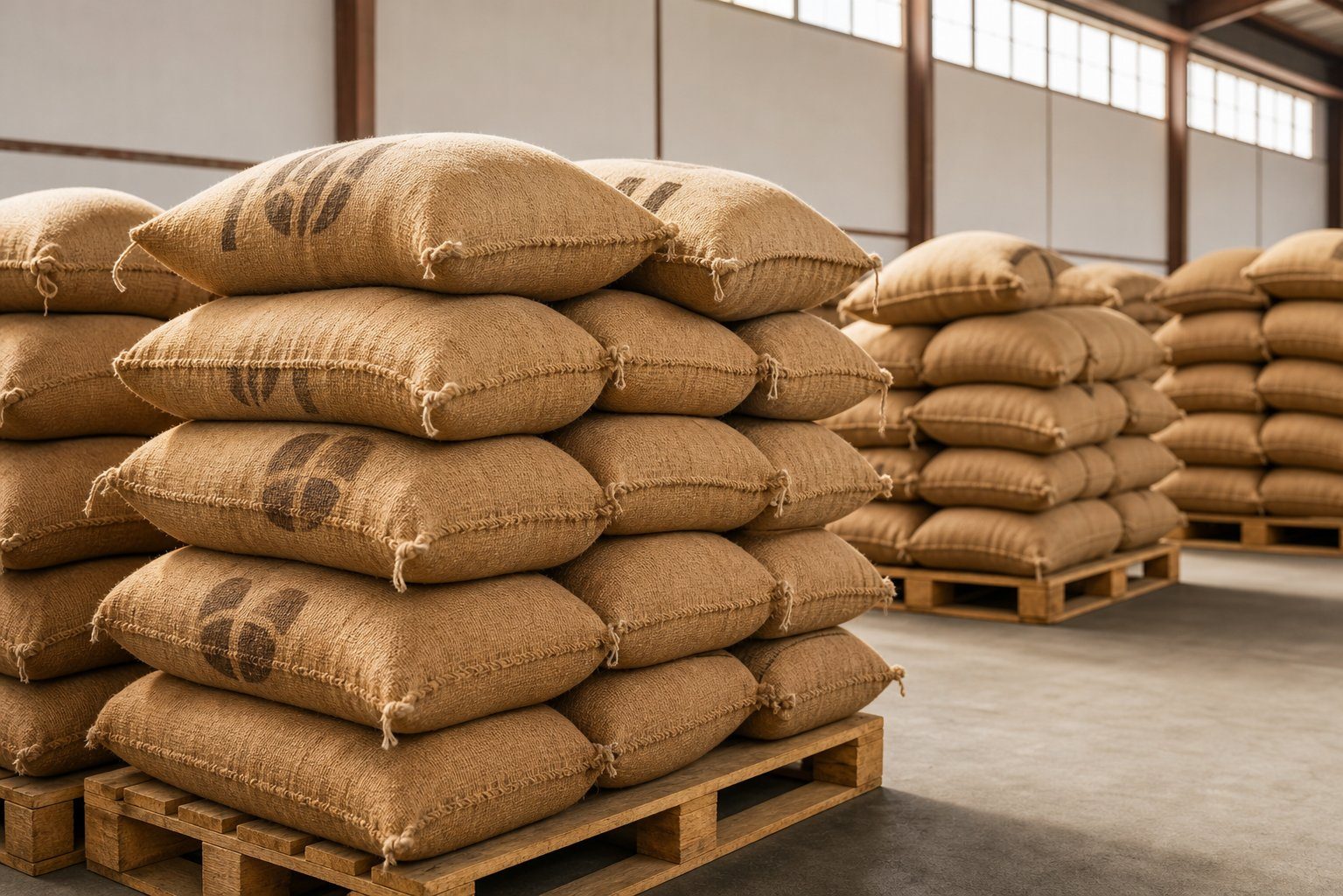
Lots above the moisture limit are re-dried; foreign matter, clusters and broken beans are removed. Beans are stored on pallets in a ventilated warehouse, away from odours and damp.
5. FPIS Grading & Analysis
The Federal Produce Inspection Service samples bagged lots and issues the grading certificate. Fat content, free fatty acid and other parameters are tested by laboratory when the contract requires.
6. Loading Inspection
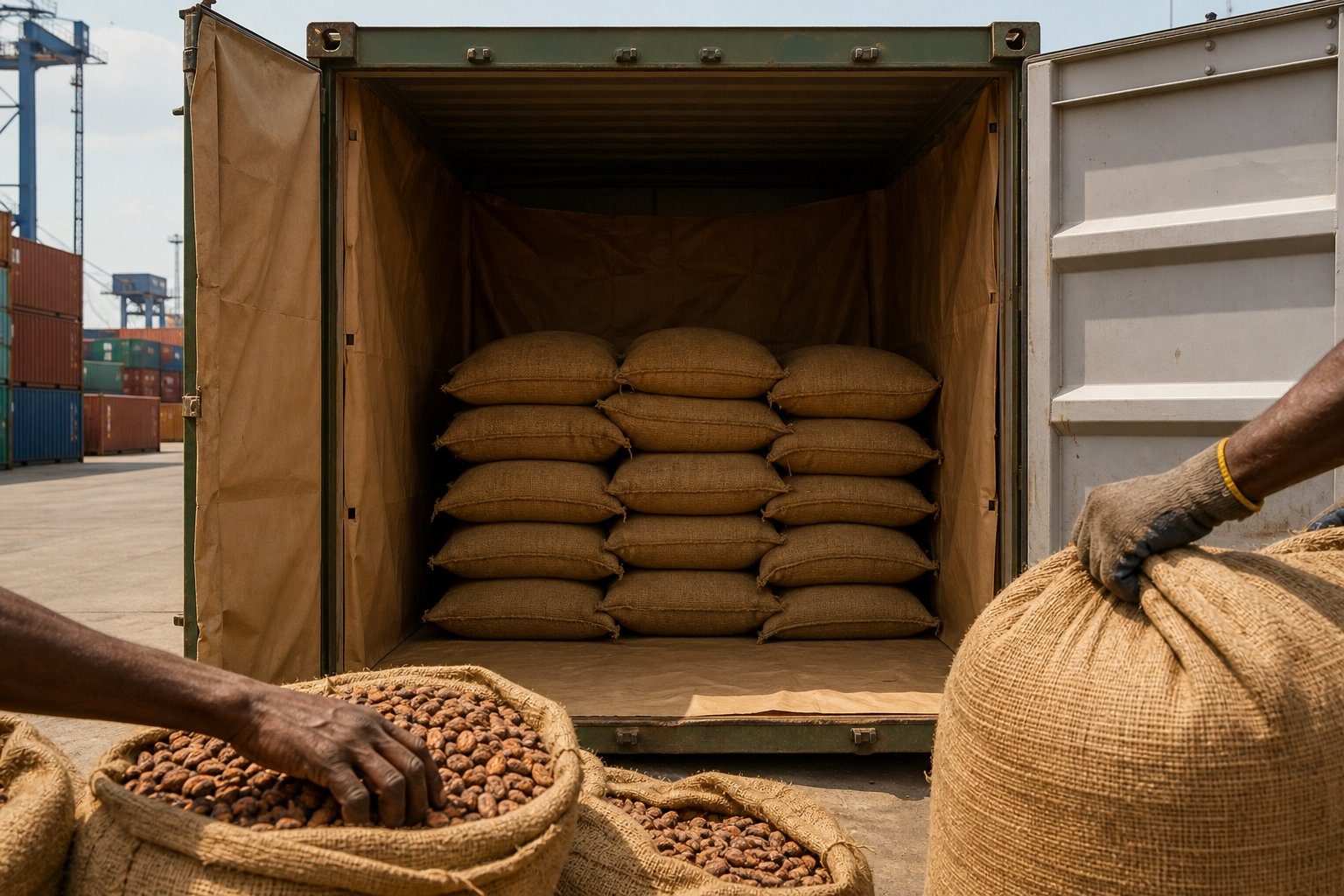
Bag counts, weights, container cleanliness, lining and desiccant are verified at stuffing. Photographs and a loading report accompany the shipping documents.
What the Numbers Mean
The parameters that define export-grade cocoa beans, and why each one matters to your process.
| Parameter | What it tells you | Why it matters | Method |
|---|---|---|---|
| Cut test — fermentation | % of beans fully brown vs. partly purple vs. slaty | Flavour development; slaty beans are bitter and astringent | ISO 1114 |
| Cut test — mould | % of beans with internal mould | Off-flavours and mycotoxin risk; the most serious defect | ISO 1114 |
| Cut test — other defects | % insect-damaged, germinated, flat | Reduces usable nib and yield | ISO 1114 |
| Moisture | Water content of the beans | Above limit, beans mould in transit; you also pay for water | ISO 2291 / calibrated meter |
| Bean count | Beans per 100 g | Bean size, shell ratio and nib yield; defines main vs light crop | ISO 2451 |
| Fat content | % cocoa butter in the nib | Butter yield — the headline economic figure for grinders | Laboratory analysis |
| Free fatty acid | Degradation of the fat | Butter quality; rises with poor storage and mould | Laboratory analysis |
| Foreign matter & broken beans | Stones, shell, clusters, pieces | Processing losses and equipment wear | Visual / sieve |
Third-Party Inspection Welcome
For first orders, letters of credit or large programmes, many buyers appoint an independent inspection company. We welcome it. Agencies such as SGS, Bureau Veritas, Intertek and Cotecna can be engaged to draw samples, perform the cut test and moisture test, verify weights and bag counts, and supervise container stuffing and sealing, with laboratory testing to the standard you specify.
We coordinate access, scheduling and sampling with the inspector and build the inspection timeline into the shipment plan so that it does not delay the vessel booking. Inspection fees are normally for the buyer's account unless otherwise agreed.
Protecting the Beans Between Lagos and Your Factory
Cocoa beans are hygroscopic and sensitive to condensation. A container that leaves the tropics and arrives in a European winter can "sweat", and damp beans mould. We ship only beans at or below the contracted moisture, line containers with kraft paper, place desiccant in each container and stow bags away from the container walls and roof.
Containers are fumigated under certificate before departure, and we recommend buyers inspect and ventilate promptly on arrival. These practices protect your cargo, your yield and your delivery schedule.
Have a Specification to Meet?
Send us your target grade, bean count, moisture and laboratory parameters. We will tell you plainly which lots meet them and how we will prove it.